Equipment for Evaluating Ductility, Torque, and Torsional Resistance in Wires, Rods, and Metallic Materials
⭐ What is the NJS Series?
The NJS Series is a torsion testing machine designed to measure the plasticity, mechanical strength, ductility, and torsional behavior of wires, rods, and other metallic materials. Its design allows both automatic and manual testing, providing excellent versatility for industrial quality control applications as well as scientific research.
It is widely used in laboratories, universities, metalworking industries, steel wire manufacturers, and certification centers that require precise torque and angle-of-twist data in compliance with international standards.
🔍 What Does This Equipment Do?
Applies controlled torsional loads to evaluate plasticity, ductility, torque resistance, and behavior up to fracture.
Automatically records the initial torque (M1) and maximum torque (M2).
Performs automatic or manual tests with selectable torque and angle measurement points.
Identifies surface defects in wires and rods during torsion testing.
Allows retrieval and printing of test results after completion.
🛠 Testing Modes
1️⃣ Automatic Test
The operator turns the handwheel until the specimen fractures.
The machine automatically records:
M1: Initial torque
M2: Maximum torque reached
Results can be displayed or printed after the test.
2️⃣ Manual Test
Allows the selection of any angle or torque level at up to 9 measurement points during the test.
Ideal for research applications requiring a detailed torsion curve analysis.
⚙️ Main Technical Specifications
Maximum torque: 150 Nm
Minimum torque resolution: 0.05 Nm
Accurate measurement range: 20–150 Nm
Maximum torsion angle: 9999.9°
Minimum angle resolution: 0.1°
Relative torque error: ≤ ±1.0%
Torque repeatability: ≤ 1.0%
Maximum specimen diameter: 10 mm
Maximum testing space: 260 mm
Power supply: AC 220V ±10%
📏 Applicable Standards
Complies with international standards for torsion testing, including:
ASTM A938
ISO 7800:2003
GB/T239-1998
GB 10128
Equivalent international standards
🧪 Applications
Metallic wires
Steel rods
Drawn wire products
Metallic materials subjected to torsional loads in industrial processes
Evaluation of surface defects under torsion
Ductility testing for quality certification purposes
¿Qué es la Máquina para Pruebas de Forja, Impacto y Doblado en Materiales Metálicos? La máquina para pruebas de forja, impacto y doblado son equipos especializados diseñados para evaluar el comportamiento mecánico de los metales cuando son sometidos a fuerzas extremas, tal como ocurre en procesos industriales de: Forjado, Prensado, Laminado, Conformado, Doblado de varillas, barras o láminas, Impactos de alta velocidad. Estas pruebas permiten conocer la ductilidad, resistencia, tenacidad, deformación plástica, anisotropía y comportamiento bajo cargas dinámicas del material. Son esenciales para el control de calidad en industrias metalúrgicas, automotrices, aeronáuticas, estructurales y de fabricación de cables o varillas de acero.
¿Qué es la prueba de forja? Es una prueba que reproduce lo que le ocurre al metal cuando recibe un impacto súbito y muy rápido, tal como en procesos reales de forjado. Permiten estudiar: Cómo se deforma el metal instantáneamente, Si forma grietas o fallas internas, Su capacidad de endurecimiento, Su resistencia bajo carga extrema, Simulan exactamente las condiciones industriales, por eso son muy usadas en acerías y plantas de laminación.
The CCT-NC Series is designed to perform accelerated corrosion testing under controlled conditions, complying with advanced test methods used by manufacturers such as Ford, Volvo, Toyota, and Honda. Its modular design allows functions and capabilities to be added or upgraded according to laboratory requirements.
Each chamber is engineered to reproduce the most demanding automotive and industrial environments while fully complying with global standards such as:
ASTM G85 (Annex A5, Prohesion)
GMW 14872
Ford CETP 00.00-L-467
SAE J2334
Toyota TSH1555G
ISO 16701 and ISO 14993
Volkswagen PV 1210
Volvo VCS 1027
And many more
Whether validating coatings, fasteners, or components, Auto Technology’s Cyclic Corrosion Test Chamber provides repeatable, traceable, and certifiable testing conditions—the same chambers used in our own A2LA-accredited corrosion testing laboratory.
🧩 Standard Salt Spray Testing Equipment
The CCT (Cyclic Corrosion Test Chamber) salt spray cabinet is the foundational testing system that has served the corrosion testing community for more than 50 years. Its simple and reliable design supports traditional testing specifications such as ASTM B117, MIL-STD-883, ASTM G85 A1 (Acetic Acid), ASTM B368 (CASS), MIL-STD-810D, and many others...
🧩 Multipurpose Salt Spray Testing Equipment
The Multipurpose Fog Chamber (MPF) is designed to meet automotive accelerated corrosion testing specifications that include salt fog, humidity, acetic acid, CASS, and simple cyclic testing such as ASTM G85 Annex 5...
🧩 Cyclic Salt Corrosion Testing Equipment
The Auto Technology Cyclic Corrosion Chamber is one of the most sophisticated and advanced cyclic corrosion systems available. Utilizing advanced software for unmatched data acquisition and control, the CCT is capable of performing all major corrosion standards, including SAE J2334, GM9540P, ASTM B117, and many others...
🔧 General Features
• Modular Design
Allows additional functions and upgrades without replacing the entire chamber.
Easy maintenance and component accessibility.
• Available Test Modes
Includes fully automatic cycles designed to reproduce realistic corrosion environments:
Salt Fog
Prohesion Cycle
Condensation / Humidity
Air Drying
Dry-Off Cycle
Ambient Drying
Programmable temperature and humidity ramps
Automotive-specific cycles for Ford, GM, Honda, Toyota, and Volvo
• Intelligent Controller
Digital touchscreen controller
Records and stores all test data
Custom or pre-programmed cycle configuration
Integrated data logging
USB port and data transfer capability
• Construction and Materials
Corrosion-resistant chamber construction
High-uniformity salt spray atomization system
Integrated solution reservoirs
• Safety Features
Over-temperature protection
Visual and audible alarms
Automatic shutdown in the event of system failure
📏 Key Product Features
Feature
Benefit
True Multi-Cycle Control
Simulates salt spray, humidity, drying, ambient temperature, and temperature ramps within a single programmable system.
Mechanical Refrigeration*
Enables testing down to -30°C and provides rapid transitions between temperature and humidity phases.
Controlled Relative Humidity (RH)*
Maintains precise humidity levels for ISO 16701, GMW 14872, and Volvo CCT protocols.
Oscillating Spray Bars*
Provides uniform salt solution impact for Ford L-467 and Volvo-specific testing.
Automated Pneumatic Lifts*
Allows smooth, hands-free lid operation for environmental cycling and operator safety.
Multiple Mixing Tanks*
Supports multiple test solutions or extended-duration testing without refilling.
Immersion Capability*
Enables cyclic immersion testing for advanced corrosion fatigue and paint creep evaluations.
Immersion Capability*
Provides direct high-velocity spraying for specialized coating and fastener testing.
Temperature Ramp Function
Simulates natural environmental transitions with precise programmable control.
Computer or PC Controls*
Offers intuitive touchscreen and PC-based programming with complete data logging and traceability.
LN₂ Package*
Enables rapid cooling transitions and low-temperature conditioning using liquid nitrogen.
SO₂ Package*
Introduces controlled sulfur dioxide for specialized automotive and coating industry testing.
Solution Recirculation System*
Reduces solution waste and maintains consistent salt concentration during long-duration tests.
Recirculation Scrubbers* and Forced Ventilation*
Improves chamber airflow and fog evacuation, ensuring uniform conditions and faster cycles.
U.S.-Built Reliability
Manufactured and calibrated in Ohio for dependable performance and rapid support.
Global Support Network
Worldwide availability of parts, calibration, and technical assistance.
12-Month Warranty
Comprehensive warranty backed by experienced service engineers.
Data Logging* and Audit Traceability
Simplifies compliance documentation through automatic logging of temperature, humidity, and spray-cycle data.
* Optional custom feature.
🔍 Full Range of Configurations
Available in capacities from 20 to 112 ft³, as well as custom walk-in chambers, with options including:
Mechanical refrigeration (down to -30°C / -22°F)
Controlled relative humidity
Immersion and impact testing packages
Automated pneumatic covers
Solution recirculation and mixing systems
LN₂ and SO₂ additive packages for specialized environments
Compatible, Calibratable, and Traceable
Designed and manufactured in the USA to fully comply with ASTM, ISO, SAE, and OEM specifications.
Compatible with ATC’s internal A2LA calibration and proficiency testing programs.
Trusted by the same engineers who help define the standards followed throughout the industry.
¿que es un pendulo de impacto caída libre? Las Torres de Caída de Peso son sistemas diseñados para realizar pruebas de impacto monoaxiales y multiaxiales en productos o especímenes normalizados. Permiten ajustar energías de impacto entre 5 y 2000 julios (J), lo que posibilita ensayar una amplia variedad de materiales y componentes. Gracias a su estructura modular y amplia zona de ensayo, pueden adaptarse a diversas necesidades industriales y actualizarse fácilmente.
Aplicaciones: Ensayos en productos terminados: equipos deportivos (botas de esquí, patines, snowboard) y componentes automotrices. Pruebas según normas internacionales: ISO 6603-2, ISO 7765-2, ASTM D 3763, ASTM D 3029 (Método B), ISO 8256 A, CAI Test Boeing BSS 7260, Airbus AITM 1.0010, Charpy ISO 179 y ISO 148-1. Ensayos rotura/no rotura o instrumentados (adquieren fuerza y energía absorbida).
Salt Fog, Humidity Corrosion Test Chamber – M Series
The M Series Salt Fog & Humidity Test Chambers from Auto Technology Company have been developed to provide highly precise, reliable, and repeatable corrosion testing, making them an ideal solution for research laboratories, quality control departments, and manufacturers that need to evaluate the performance of materials and coatings under accelerated corrosive conditions. With more than 75 years of experience in the development of corrosion testing systems, Auto Technology combines high-precision engineering with advanced technology to deliver robust, customizable equipment backed by proven performance.
Designed to meet international standards such as ASTM B117 and ISO 9227, the M Series chambers incorporate a Water Jacket Heating System that ensures uniform temperature distribution and consistent salt fog generation, creating a stable testing environment that guarantees repeatable and reliable results. In addition, these systems can be configured to comply with a wide range of corrosion testing methods and procedures, adapting to the specific requirements of each industry.
The M Series is available in different capacities to meet applications ranging from laboratory testing to high-volume validation processes. Their design incorporates advanced systems for control, data recording, humidity regulation, temperature cycling, ventilation, SO₂ dosing, and multiple customized configurations that allow simulation of highly demanding environmental conditions. These features make the chambers an essential tool for evaluating the performance of metals, paints, coatings, automotive components, aerospace products, electronic devices, and a wide variety of materials exposed to corrosive environments.
The M Series Salt Fog & Humidity Test Chambers provide intuitive operation, a highly durable design, and excellent stability during long-term testing. Manufactured in the United States and supported by calibration services, specialized technical support, and customization options, they represent a reliable investment for laboratories seeking to maximize the accuracy of their corrosion testing processes and meet the highest international quality standards.
¿que es Cámara de Prueba de Corrosión scch? La serie SCCH es la solución más completa para ensayos de corrosión acelerada. Permite ejecutar métodos como niebla salina, CASS, Corrodkote y pruebas de condensación con total estabilidad y precisión. Su diseño con camisa de agua garantiza un control térmico uniforme, mientras que su interior sin costuras y recubierto de polímero evita la corrosión interna y facilita la limpieza.
Ideal para recubrimientos metálicos, piezas automotrices, galvanizados, polímeros y tratamientos superficiales que requieren resistencia excepcional a ambientes hostiles.
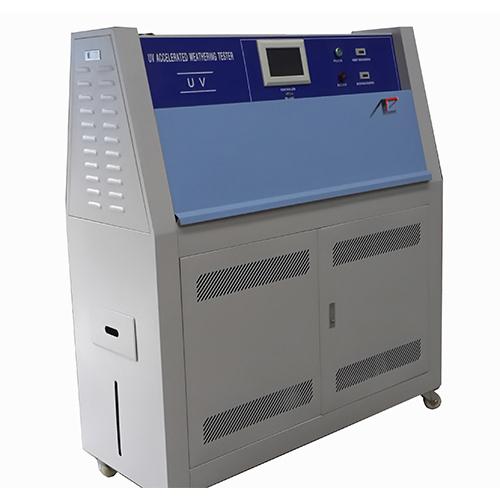
Accelerated Simulation of Sunlight, Humidity, and Weathering
📘 General Description
The UV Weathering Test Chamber is designed to evaluate the resistance of non-metallic materials to ultraviolet aging. It accelerates the effects of sunlight, moisture, and condensation that materials experience during real outdoor exposure.
It is an essential tool for quality control laboratories, coatings manufacturers, plastics producers, automotive suppliers, construction materials testing, and any industry where products are exposed to weathering conditions.
🔍 What Tests Does It Perform?
This chamber allows the evaluation of:
Resistance to solar UV radiation
Color fading and gloss degradation
Crack formation, erosion, and blistering
Loss of mechanical properties
Stability of materials exposed to rain, humidity, and thermal cycling
Typical materials tested include:
Plastics
Coatings
Paints
Rubber
Polymers
Sealants
Composite materials
Textiles
Packaging materials
Outdoor products
⚙️ Key Features
• UV Sunlight Simulation
The chamber utilizes specialized UV lamps to reproduce the most damaging components of solar radiation.
The irradiance level does not exceed 50 W/m², complying with accelerated UV weathering testing standards.
• Precise Temperature Control
The system incorporates a black aluminum panel connected to the temperature sensor.
Temperature control is achieved using either:
Black Panel Thermometer (BPT)
Black Standard Thermometer (BST)
This ensures stable and accurate temperatures throughout the test.
• Fixed Radiometer Probe
Eliminates frequent sensor removal
Reduces handling-related errors
Maintains calibration accuracy for longer periods
• High-Precision UV Irradiance Control
A specialized UV radiometer continuously measures UV exposure.
This provides precise monitoring and control of irradiance throughout the testing process.
• Programmable UV and Condensation Cycles
Users can select from:
UV exposure only
Condensation only
Alternating UV/condensation cycles
Fully automated long-duration weathering cycles
These options allow simulation of:
Rain exposure
Nighttime humidity and condensation
Intense sunlight conditions
⭐ What Is This Equipment Used For?
This chamber enables manufacturers and laboratories to predict the service life of materials exposed to outdoor environments and rapidly evaluate:
Durability
Radiation-induced degradation
Color stability
Weathering resistance
Performance under real climatic conditions
Behavior in severe environmental conditions
It is an essential tool for product development and quality control applications where appearance, durability, and weather resistance are critical performance requirements.
¿que es Cámara de prueba de resistencia a la intemperie UV? Es una Cámara de Intemperismo UV permite reproducir de manera controlada los efectos más dañinos de la radiación solar y la humedad sobre materiales no metálicos. Con un sistema de control basado en panel negro, medición precisa de irradiación UV y la posibilidad de alternar entre ciclos de luz y condensación, este equipo garantiza resultados confiables y repetibles. Es ideal para evaluar la durabilidad, el cambio de color, la pérdida de propiedades mecánicas y el comportamiento frente a la intemperie de plásticos, recubrimientos, pinturas, selladores y materiales destinados a uso exterior. Diseñada con una sonda UV fija, irradiación estable y controles automáticos, es una herramienta esencial para laboratorios que buscan predecir la vida útil de sus productos en condiciones climáticas reales.
.
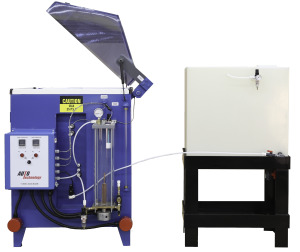
MPF Series Multi-Purpose Fog Chamber
The MPF Series Multi-Purpose Fog Chamber from Auto Technology Company has been engineered to deliver highly accurate, reliable, and repeatable accelerated corrosion testing for laboratories, research centers, quality control departments, and manufacturers requiring comprehensive environmental durability evaluations. With more than five decades of experience in corrosion testing technology, Auto Technology has developed the MPF Series as a versatile solution capable of performing far more than conventional salt spray testing.
Unlike standard salt fog chambers, the MPF Series supports a wide variety of corrosion and environmental test methods, including Salt Spray (ASTM B117), CASS (ASTM B368), Humidity (ASTM D1735), Acetic Acid, and Prohesion (ASTM G85 A5), making it suitable for automotive, aerospace, military, industrial, and international testing applications. This flexibility allows laboratories to perform multiple corrosion test protocols using a single system, reducing equipment investment while increasing testing capabilities.
Designed with durability and operator convenience in mind, the chamber features a non-corrosive fiberglass construction that provides exceptional resistance to aggressive testing environments and ensures a long operational life. Its transparent lid allows operators to monitor specimens throughout the testing cycle without disturbing the controlled internal environment, while the low-profile design simplifies specimen loading and unloading. Front-access maintenance points further improve accessibility, making routine servicing quick and efficient.
The MPF Series incorporates microprocessor-based temperature controllers, providing precise environmental regulation and consistent test conditions throughout every cycle. For laboratories requiring more advanced testing capabilities, an optional cyclic control package enables programmable corrosion cycles that simulate real-world environmental exposure with greater accuracy. Additional optional features include automated solution spray systems, manual or automatic mixing tanks, computer-based data recording software, multiple recording devices, and calibration certificates traceable to NIST standards.
Available in four chamber capacities—20, 30, 40, and 90 cubic feet—the MPF Series accommodates a wide range of specimen sizes and testing volumes. Operating temperatures extend from ambient conditions up to 55°C, while humidity testing maintains 95–100% relative humidity, ensuring compliance with demanding corrosion testing requirements. Each model includes a 35-gallon (132-liter) solution reservoir and has been designed to provide efficient solution consumption, stable airflow, and dependable long-term performance.
The MPF Series is the ideal corrosion testing solution for manufacturers seeking dependable quality control, product validation, material development, and compliance with international testing standards. Combining rugged construction, advanced environmental control, exceptional versatility, and proven Auto Technology reliability, the MPF Series delivers the performance required for the most demanding corrosion testing applications.
¿que es Cámara de prueba de temperatura ? la Cámara de prueba de temperatura es un equipo para ensayos de estabilidad y resistencia térmica en materiales y componentes (Simulador de ambientes térmicos extremos con control preciso). Construcción en acero inoxidable, ventana de observación amplia, puerto para sensores y ruedas móviles. Ideal para pruebas de calidad y envejecimiento acelerado en laboratorio.

 +52 33 3817 0140 | +52 33 3817 8122










 ⭐ What is the NJS Series?
 (Agrandar)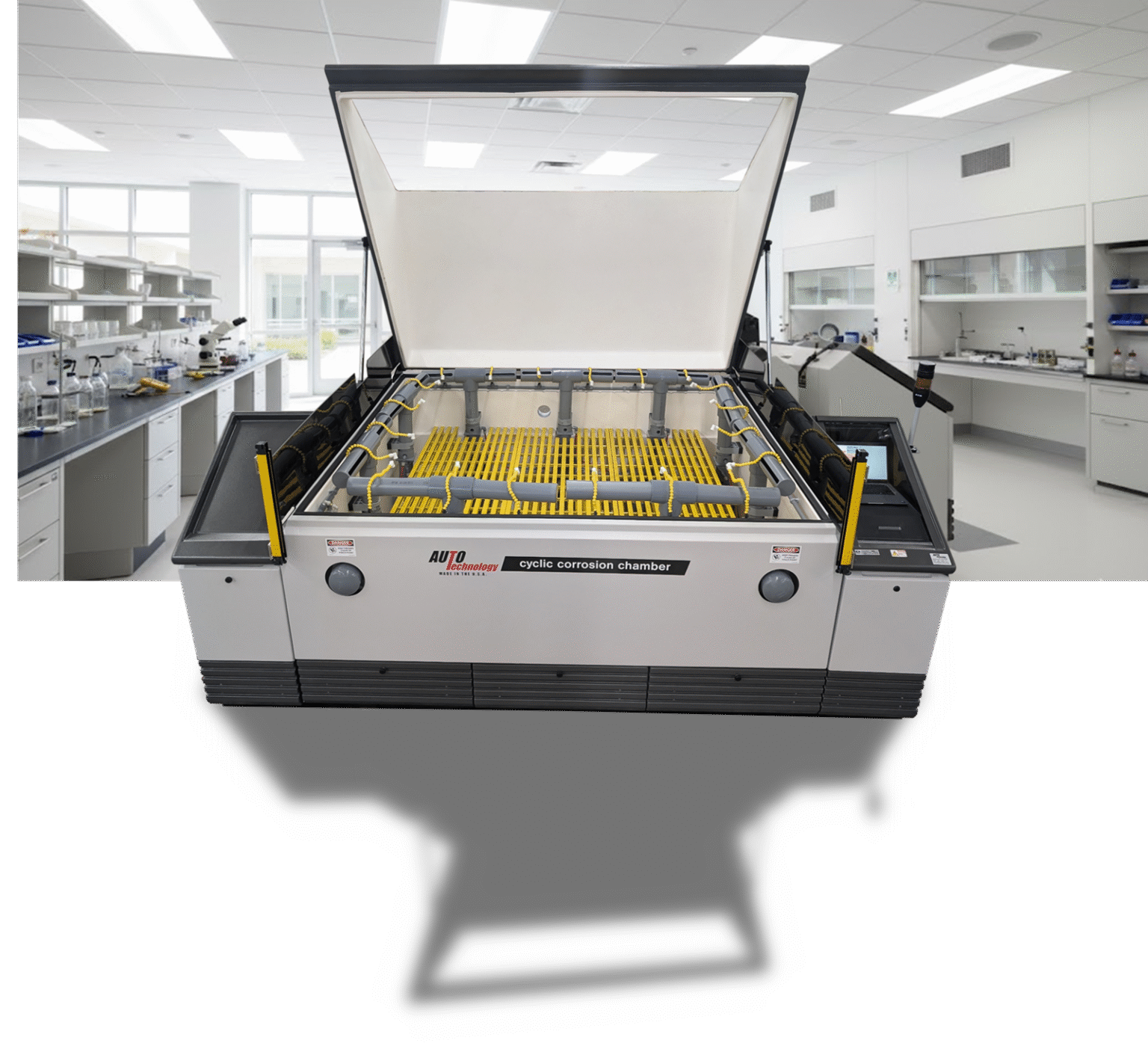

 Accelerated Simulation of Sunlight, Humidity, and Weathering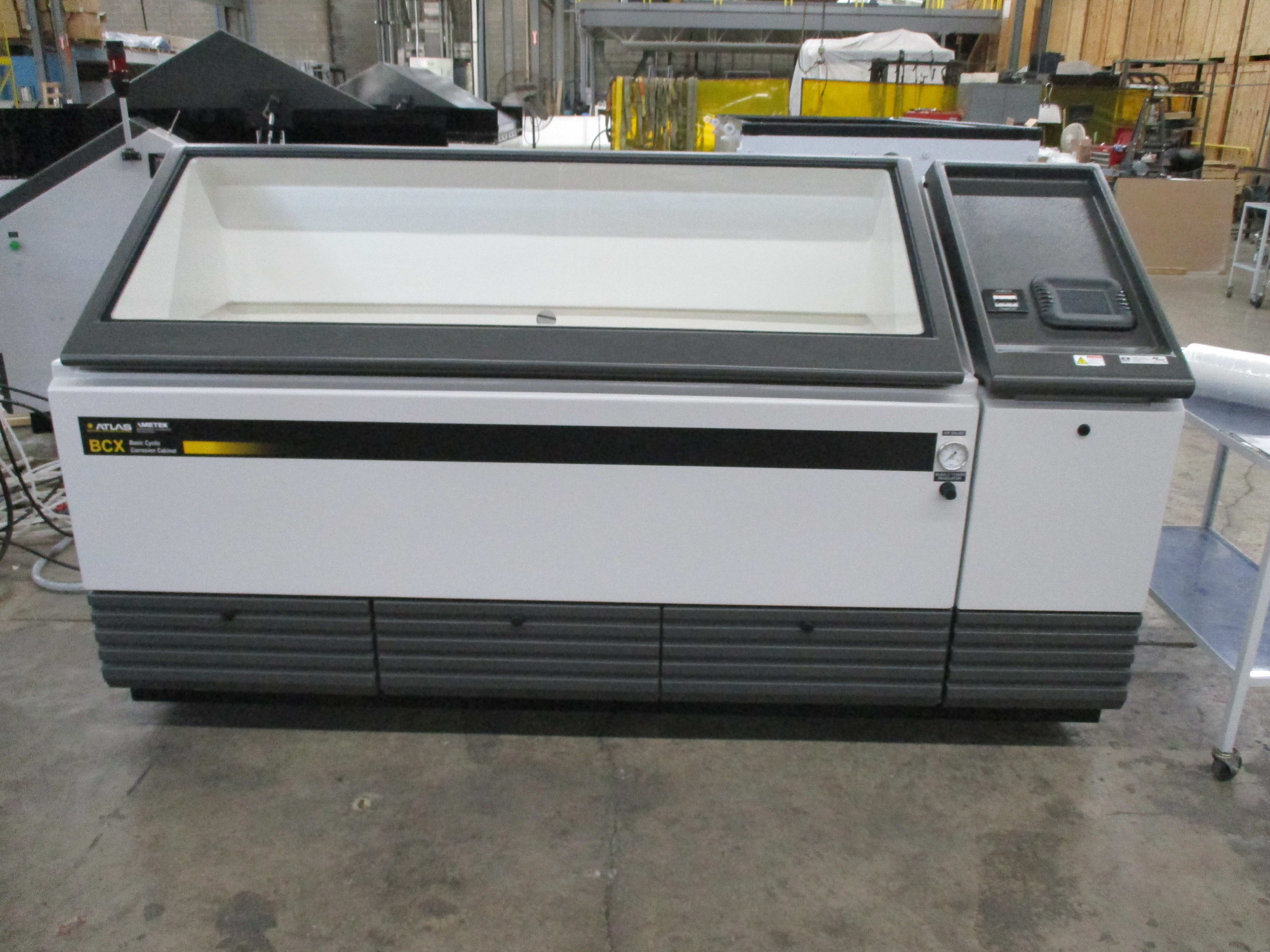









 ¡Welcome!
  WhatsApp,
  leave us a message on the fixed
  Chat icon.


