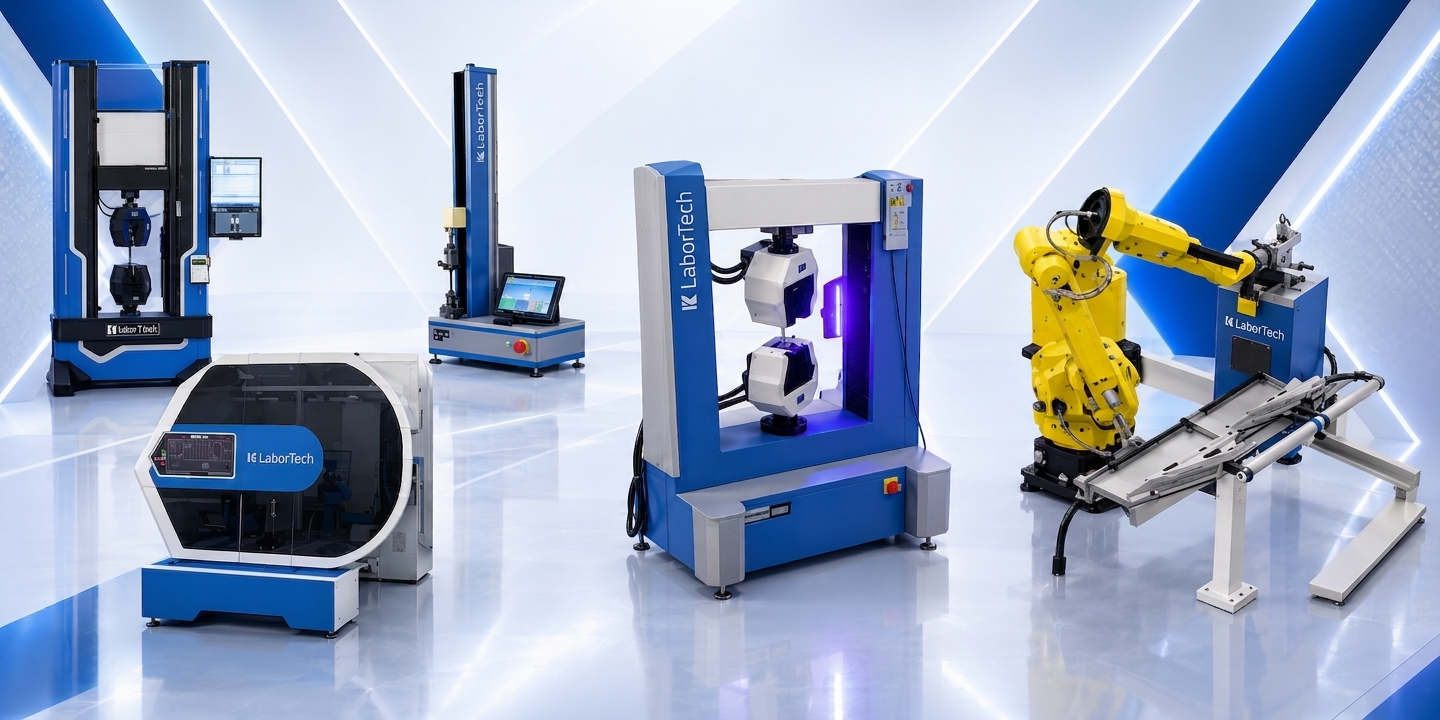
LABORTECH offers comprehensive solutions for dynamic and fatigue testing of materials. These fully integrated testing systems include servo-hydraulic, servo-electric, and linear actuators with capacities ranging from 500 N up to 2 MN.
These systems are designed to reliably perform high-cycle and low-cycle fatigue tests, crack initiation and growth analysis, biaxial and axial-torsional testing, as well as fracture toughness evaluation.
Users can efficiently carry out tests in accordance with international standards, including:
ISO 12106 – Low-cycle fatigue testing under strain control
ASTM E606 – Standard test method for strain-controlled fatigue testing
DIN 50100 – Testing of metallic materials using the Wöhler curve method
The H.11 series servo-hydraulic biaxial testing systems are designed for low- and high-cycle fatigue testing, fracture toughness evaluation, and crack propagation analysis, among other applications...
The EP series electromechanical linear dynamic testing machines, based on linear motor technology, are designed to test a wide range of materials and components in both dynamic and static modes.
They are ideal for applications requiring clean, quiet, and oil-free operation, such as in the plastics, aerospace, and medical industries. These systems offer testing frequencies of up to 200 Hz...
The LC series electrodynamic testing machines are designed for testing materials, components, and structures in laboratories, research centers, and industrial environments.
Unlike high-cycle systems, these machines operate at lower frequencies and perform fewer loading cycles, applying tension, compression, and torsion under various temperature conditions...
The H.10 series hydraulic dynamic test benches are designed for forces up to 10 MN. They feature T-slot plate platforms or load-bearing structures and are intended for low- and high-cycle fatigue testing of components or full-scale products...
All versions of our CREEP testing systems are designed to ensure full customer confidence in their performance and accuracy during long-term constant loading (material creep), whether under force or stress control, including elongation measurement and operation under stable, homogeneous temperature conditions in high-temperature furnaces.
The intuitive and user-friendly long-term testing software developed by LABORTECH guarantees reliable test results, even after 100,000 hours of continuous loading.
LABORTECH offers creep testing machines for long-term testing, where a constant load is applied using a lever mechanism with a spring and a control force sensor.
All versions of these creep testing systems are designed to provide reliable and precise performance under long-duration loading conditions...
The C.5 series electromechanical creep testing machines, featuring a vertical floor-standing design and capacities of up to 250 kN, are designed for quasi-dynamic cyclic testing and long-term applications.
They provide precise constant load application with the possibility of cyclic loading up to 2 Hz...
The CREEPTest 7.xxx system enables simultaneous testing on up to six independently controlled axes, each with independent load application, control, and measurement...
It is suitable for operation at room temperature as well as at low temperatures down to –60 °C.
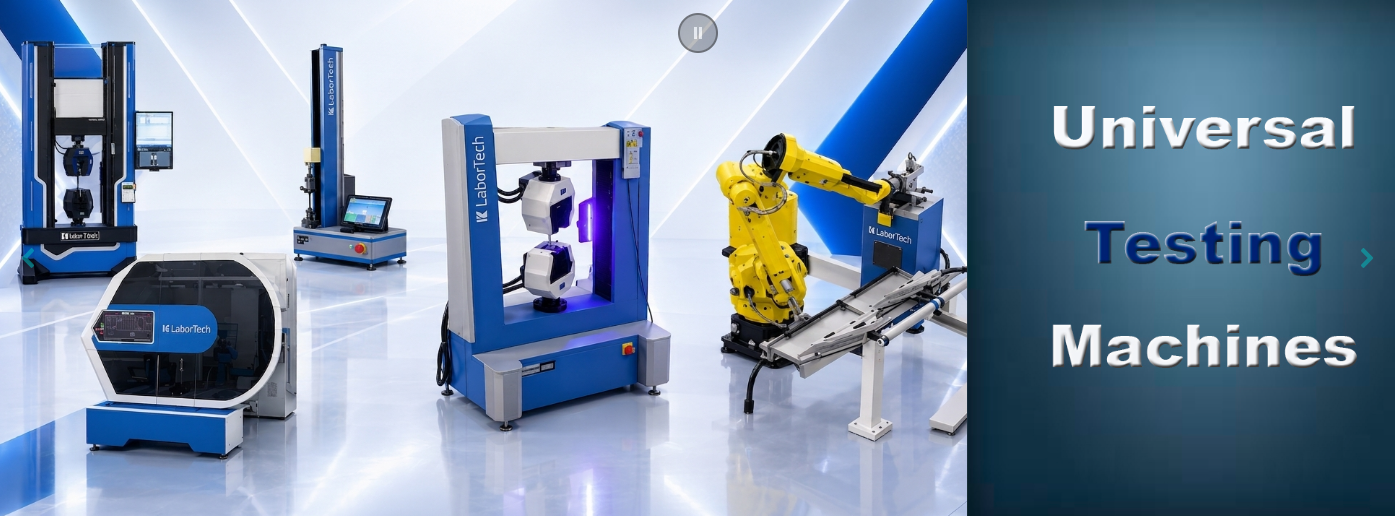
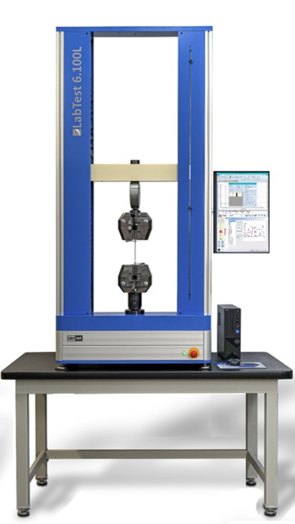
The PTS line of hydraulic universal tensile testing machines includes standard features and accessories that many other manufacturers offer only as optional—or may not offer at all.
In addition to the standard hydraulic tensile testing machines, PTS introduces its innovative line of low-capacity hydraulic universal testing machines (HLC Series).
The HT Series is specifically designed for very high-capacity applications, with capacities of:
1000 kN (225,000 lbs)
2000 kN (450,000 lbs)
The HT design simplifies specimen loading and unloading in tensile tests by positioning the tensile test space in the lower area, thanks to its actuator configuration.
The fastest and most precise non-contact interferometry-based measurement system in the world.
.
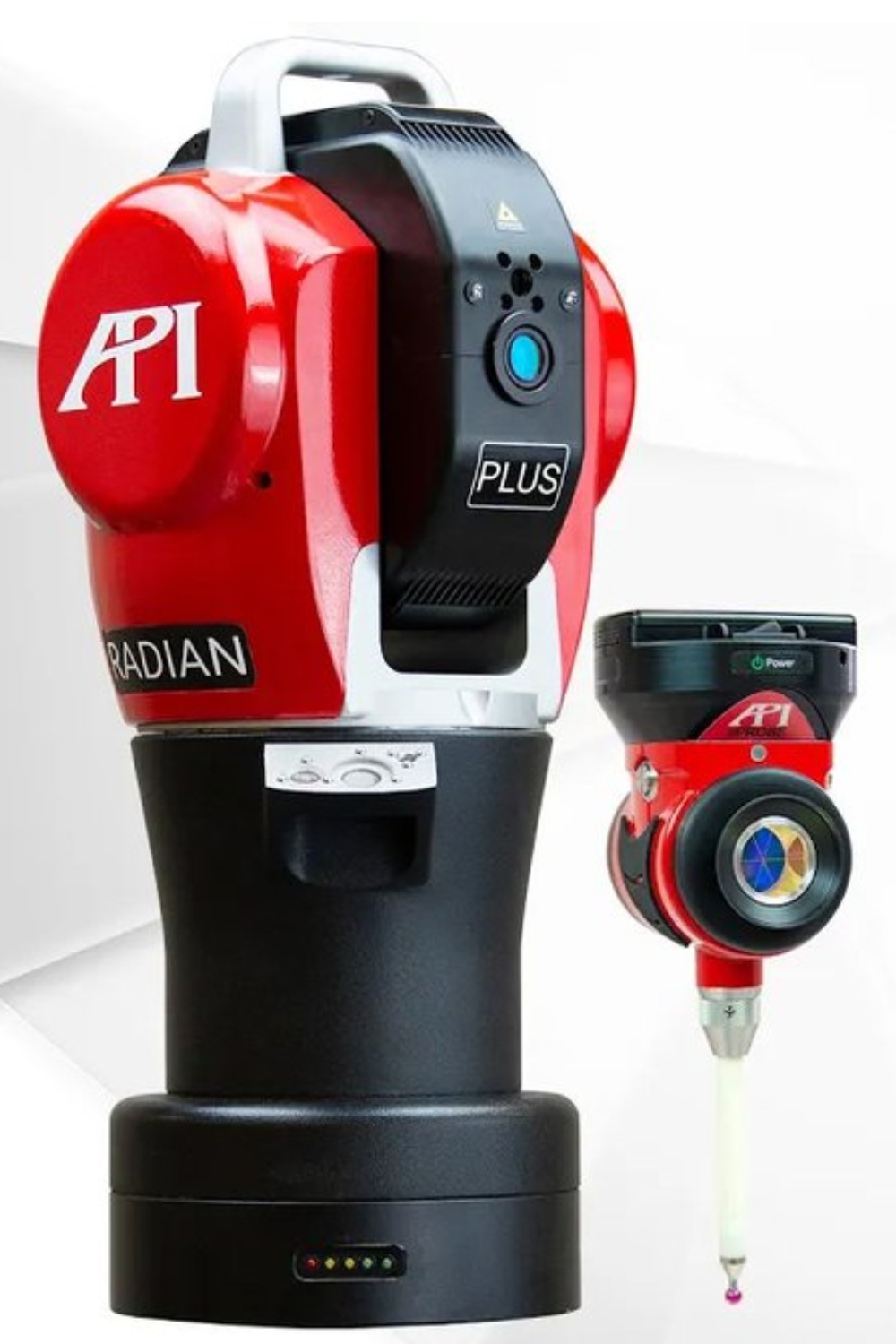
Dynamic 9D LADAR is an innovative technology that represents the fastest and most accurate non-contact measurement system in the world.
.
Its fast and precise real-time 9D LADAR data acquisition is designed to revolutionize automated in-line production measurements and conventional laser radar systems that require large sample averaging to achieve reasonable accuracy, effectively reducing data acquisition rates.
....
⇒ Designed for Durability API’s compact and rigid UNIBODY tracker design allows for shaft-mounted motors, encoders, and laser systems. The UNIBODY shaft-mounted laser innovation minimizes Abbe offset errors while also housing the laser source, optics, camera, and main electronic components of the tracker head at the center of the body.
⇒ Fast and Efficient Warm-Up Time
The UNIBODY design and centralization of all heat sources allow rapid heat distribution throughout the body during warm-up or drastic ambient temperature changes, ensuring the tracker maintains stable thermal balance during operation. This results in shorter warm-up time and superior measurement stability.
⇒ Advanced Technology 9D LADAR is an innovative technology designed to revolutionize automated production measurement. The patent-pending 9D LADAR is the fastest and most precise non-contact interferometry-based measurement system, incorporating Optical Frequency Chirp Interferometry (OFCI) technology.
.
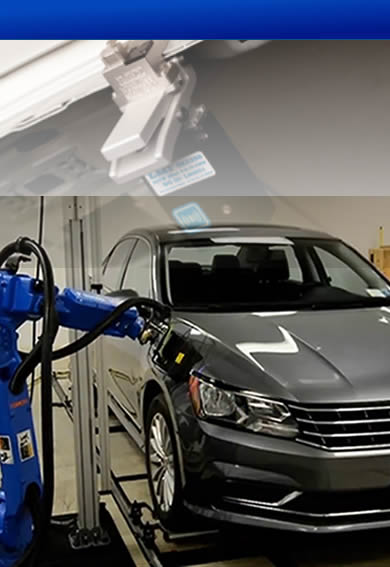
⇒ Laser Detection and Ranging 9D LADAR captures surface geometry and dimensional data for all manufacturing industries, including but not limited to: automotive, aerospace, shipbuilding, energy, transportation, machine tools, robotics, and construction.
The fastest, most precise non-contact interferometry measurement system in the world
Features:
Applications::
The Dynamic 9D LADAR undergoes rigorous testing and certification beyond the B-89 industry standard
Optical CMM: from small to large volume, easy to set up, fast and accurate
On-site CNC machine inspection
In-line inspection and dimensional control for aerospace, automotive, wind energy, and similar industries
¿que es dynamic ladar 9D? Dynamic 9D LADAR es un sistema de metrología óptica automatizada y sin contacto de la empresa Automated Precision, Inc. (API), diseñado para capturar datos de geometría dimensional y superficial de manera rápida y precisa. El término LADAR se refiere a la detección y medición por láser (Laser Detection And Ranging), y es una tecnología avanzada de medición dimensional.Está diseñado para revolucionar las mediciones de producción automatizadas en sectores como la industria automotriz.
Captura de datos 9D: Además de las tres dimensiones espaciales (3D), el sistema integra datos de geometría superficial, lo que resulta en una medición "9D" más completa.
En esumen: El Dynamic 9D LADAR es un sistema industrial de metrología que utiliza una forma avanzada de medición de distancias por láser, combinando la detección láser con la interferometría para capturar datos de geometría superficial y dimensional con una precisión y rapidez excepcionales. La medición de distancias por láser es una tecnología fundamental que opera bajo el principio del tiempo de vuelo y se aplica en una amplia variedad de dispositivos, desde telémetros sencillos, Sensores de distancia láser hasta avanzados sistemas LiDAR y el propio Dynamic 9D LADAR.
Since its beginnings more than a decade ago, Artec 3D has rapidly become a global leader in handheld 3D scanners across key industries such as industrial design & manufacturing, healthcare, science & education, and art & design.
.
Providing the most innovative 3D technology to major clients in these fields, ARTEC introduces the latest in handheld scanning solutions.
.
Its innovative technology not only allows portable scanning, but also enables scanning without the need for markers (or targets).
In addition, it is completely portable, as it can operate on battery power.
The Space Spider, a new and improved instrument for CAD users and engineers, is perfect for capturing small objects or intricate details of large objects with high accuracy and brilliant colors...
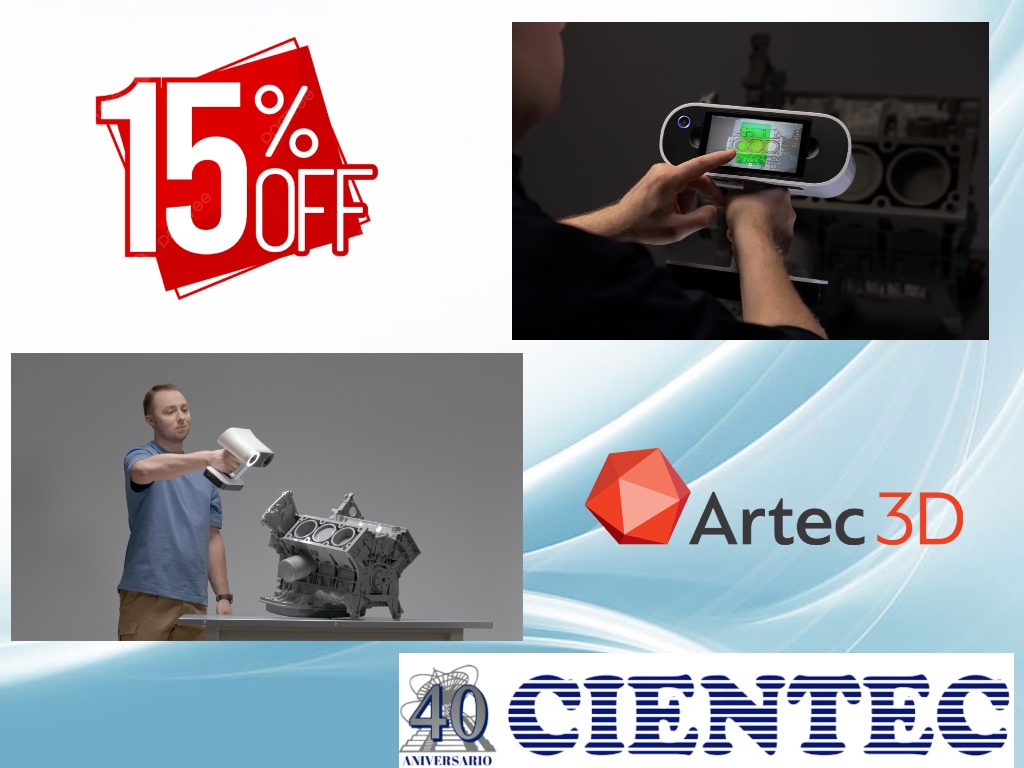
The first 3D scanner to offer onboard automatic processing, Artec Leo delivers the most intuitive workflow, making 3D scanning as easy as taking a video. As you scan your object, watch the 3D replica being built in real time on Leo’s touchscreen display. Rotate the 3D model, check whether all areas have been captured, and complete any parts you may have missed...
Industry-acclaimed software for professional 3D scanning and processing designed for use with Artec 3D scanners. Utilize all the advanced features of Artec Studio for exclusive 3D scanning and data processing with Artec scanners...
¿que es escáner 3D portátil? Un escáner 3D portátil es una herramienta tecnológica que utiliza tecnologías ópticas o láser para capturar de forma rápida y precisa la forma, el tamaño y la textura de objetos del mundo real, creando un modelo digital tridimensional de alta precisión. Estos dispositivos son versátiles y fáciles de transportar, lo que permite a profesionales como ingenieros, diseñadores y artistas digitalizar objetos y entornos directamente en el lugar de trabajo.